
Tensile strength tester
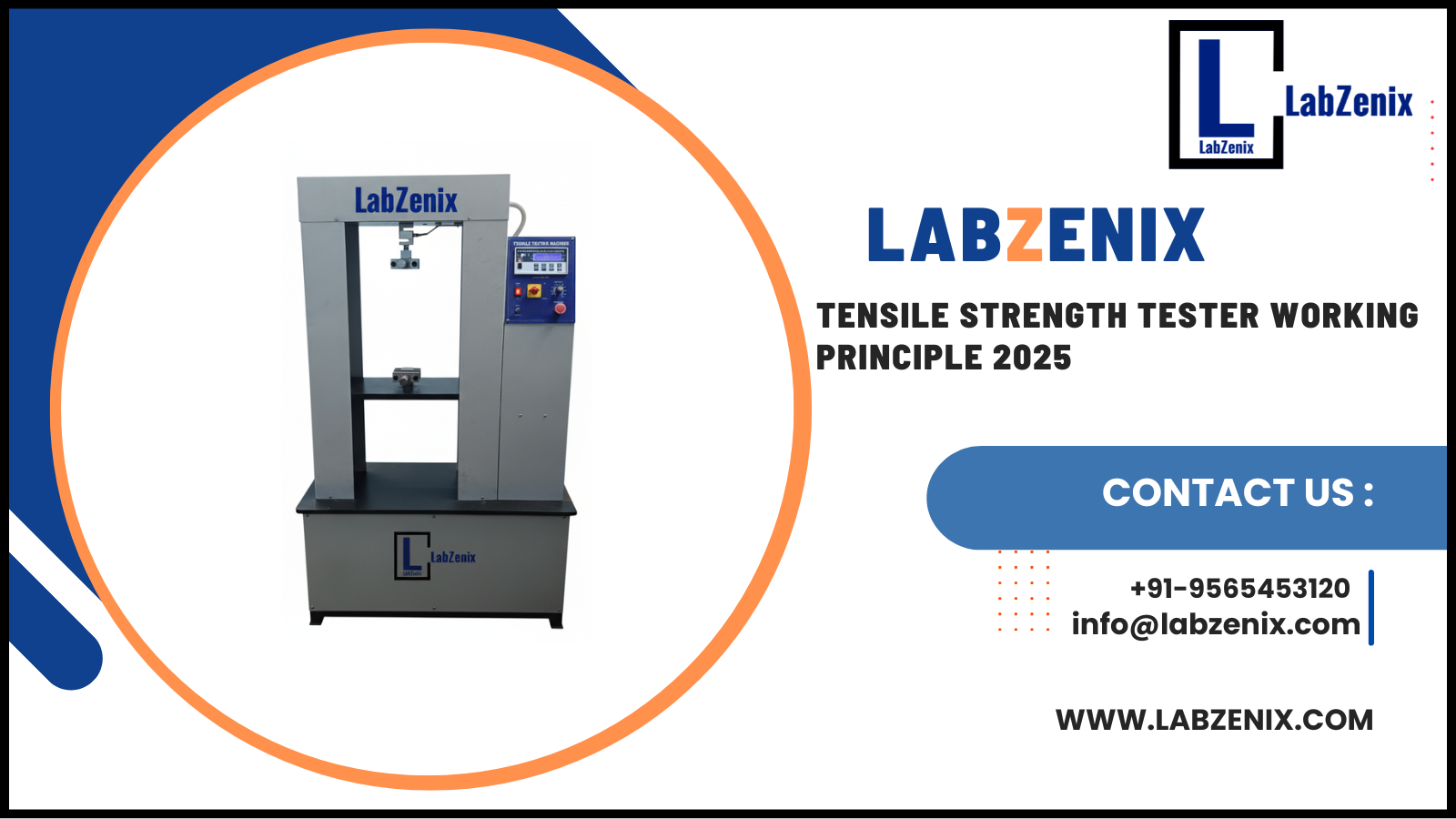
Uncover the 2025 working principle of tensile strength testers. Learn how modern digital models measure force vs. elongation to determine material strength, ensuring precise quality control. Brought to you by LabZenix.
Model No. LZTST-D
Description
📦 Beyond the Box: Demystifying the Tensile Strength Tester Working Principle 2025 for Packaging Pros
In the fast-paced world of packaging and corrugated boxes, a container is more than just a shell; it’s a promise. A promise that your product will arrive unscathed, that your brand image will remain intact, and that the supply chain’s rough handling will be nothing but a minor inconvenience. But how do we quantify this promise? How do we translate the resilience of a cardboard box into cold, hard data? The answer lies in a cornerstone of quality control: the Tensile Strength Tester.
Understanding the Tensile Strength Tester working principle 2025 is no longer a niche technicality; it’s a strategic imperative for anyone serious about durability, sustainability, and cost-efficiency. Let’s pull back the curtain on how this incredible instrument works and why its modern iterations are game-changers for our industry. 🧑🔬
The Core Concept: What Are We Actually Testing? 🤔
Before diving into the Tensile Strength Tester working principle 2025, let’s define “tensile strength.” Simply put, it’s the maximum amount of tensile (pulling) stress a material can withstand before breaking or tearing. For corrugated boards and packaging materials, this isn’t an abstract concept. It directly relates to:
Bursting Strength: The ability to resist internal pressure.
Edge Crush Test (ECT): A measure of vertical stacking strength.
Tear Resistance: How well the material resists ripping.
A modern Tensile Strength Tester is the universal machine that measures these properties with precision. Its fundamental goal is to simulate the forces a package endures during lifting, stacking, and transportation.
The Step-by-Step Tensile Strength Tester Working Principle 2025 🏗️
The Tensile Strength Tester working principle 2025 builds upon classic engineering principles but is now enhanced with digital intelligence. Here’s a breakdown of the process:
1. Sample Preparation & Mounting (The Setup)
The process begins with a meticulously prepared sample. This could be a dumbbell-shaped strip of the liner board, a specific section of the corrugated medium, or even a strip of the finished corrugated board. The sample is securely clamped at both ends by the tester’s grips. Precision here is critical; misaligned samples lead to inaccurate results. The Tensile Strength Tester working principle 2025 emphasizes automated grip systems that ensure perfect, repeatable alignment every time.
2. The Application of Force (The Pull)
Once the sample is mounted, the test begins. The lower grip remains stationary, while the upper grip moves upward at a constant, controlled speed. This motion applies a uniaxial (one-direction) tensile load to the sample. The key to the modern Tensile Strength Tester working principle 2025 is the controlled, stepper-motor or servo-motor-driven crosshead movement, which ensures a smooth, consistent, and repeatable strain rate. This is vital for comparable results across different batches.
3. Real-Time Data Acquisition (The Sensing)
As the sample is being stretched, a highly sensitive load cell (a force transducer) measures the resistance offered by the material in real-time. Simultaneously, an encoder or an extensometer tracks the elongation or the distance the sample stretches. In advanced models adhering to the 2025 standards, these data points are captured thousands of times per second, creating a detailed and accurate force-extension profile.
4. The Break Point & Analysis (The Result)
The test continues until the sample fractures. The software immediately records the “peak load” or the maximum force the sample endured—this is its Ultimate Tensile Strength (UTS). However, the Tensile Strength Tester working principle 2025 goes far beyond just the breaking point. It analyzes the entire stress-strain curve, providing insights into:
Yield Strength: The point where the material begins to deform permanently.
Elongation at Break: How much the material stretched before failing, indicating its ductility.
Modulus of Elasticity (Young’s Modulus): A measure of the material’s stiffness.
5. Smart Data Reporting (The Intelligence)
This is where the Tensile Strength Tester working principle 2025 truly shines. The raw data is processed by sophisticated software (like those offered by LabZenix) that automatically calculates all key parameters, generates detailed graphs, and stores the results in a secure database. This allows for trend analysis, statistical process control (SPC), and the generation of certificates of analysis (CoA) with a single click.
Why the “2025” Principle Matters for Packaging & Corrugated Boxes 🚀
The evolution of the Tensile Strength Tester working principle 2025 is specifically tailored to industry needs:
Predictive Performance: By testing the raw materials (liner and medium), manufacturers can accurately predict the final box’s performance (like ECT value) without producing a single box, saving time and resources.
Optimized Material Usage: In an era of cost inflation and sustainability goals, you can’t afford to over-engineer your packaging. Precise tensile data ensures you use the minimal amount of material required for the job, reducing waste and cost. 🌱
Quality Assurance & Brand Protection: Consistent testing ensures every batch of boxes meets your rigorous standards, preventing product damage and protecting your brand reputation.
Data-Driven Decisions: Modern testers provide a wealth of data that helps in R&D for developing stronger, lighter, and more sustainable packaging solutions.
Conclusion: Strength Lies in Knowledge 💡
The Tensile Strength Tester is far more than a simple “pull-till-it-breaks” machine. It is a sophisticated data acquisition system that embodies a precise scientific working principle. Understanding the Tensile Strength Tester working principle 2025 empowers packaging professionals to make informed decisions, ensure product integrity, and innovate confidently. In a world that demands stronger, smarter, and greener packaging, this knowledge isn’t just power—it’s profit.
FAQ: Tensile Strength Tester Working Principle 2025 ❓
Q1: How does the Tensile Strength Tester working principle 2025 differ from older models?
The Tensile Strength Tester working principle 2025 is defined by digital integration. While the core mechanical principle of applying a tensile force remains, modern testers feature automated controls, touch-screen interfaces, advanced sensors, and intelligent software for data analysis, storage, and reporting. They are more accurate, user-friendly, and connected than their predecessors.
Q2: Can a tensile strength tester be used for the Edge Crush Test (ECT)?
Yes, absolutely! While a dedicated ECT tester exists, a universal Tensile Strength Tester can be equipped with a special fixture to perform the Edge Crush Test. The core Tensile Strength Tester working principle 2025 of applying a compressive force to the edge of a corrugated sample remains the same, and the machine’s load cell accurately measures the peak force before crushing.
Q3: What sample specifications are needed for testing corrugated board?
For accurate results, samples must be cut to precise dimensions (e.g., 1-inch or 25-mm wide strips) using a dedicated sample cutter. The length should be sufficient to be gripped securely at both ends without the grips influencing the test area. The Tensile Strength Tester working principle 2025 relies on standardized sample prep for repeatable results.
Q4: Why is the speed of testing important in the tensile strength tester working principle?
The crosshead speed (the speed at which the sample is pulled) is critical because it affects the material’s behavior. A faster pull can result in a higher recorded strength. Standards like ASTM D828 or TAPPI T494 specify the exact speed to ensure all tests are comparable. The Tensile Strength Tester working principle 2025 ensures this speed is digitally controlled and highly accurate.
Q5: How does this testing promote sustainability in packaging?
By precisely measuring material strength, manufacturers can “right-weight” their packaging—using the minimal amount of material needed to meet strength requirements. This reduces fiber consumption, waste, and shipping costs, contributing directly to more sustainable operations. The data from a Tensile Strength Tester is key to a circular economy approach. ♻️
Contact – LabZenix

Call Us
+91 9565453120
Call Sales
+91 9354572961

info@labzenix.com

Address
LabZenix Industries Pvt. Ltd. 3D/98 New Industrial Town Faridabad , Haryana - 121001