
Tensile test machine Manufacturer
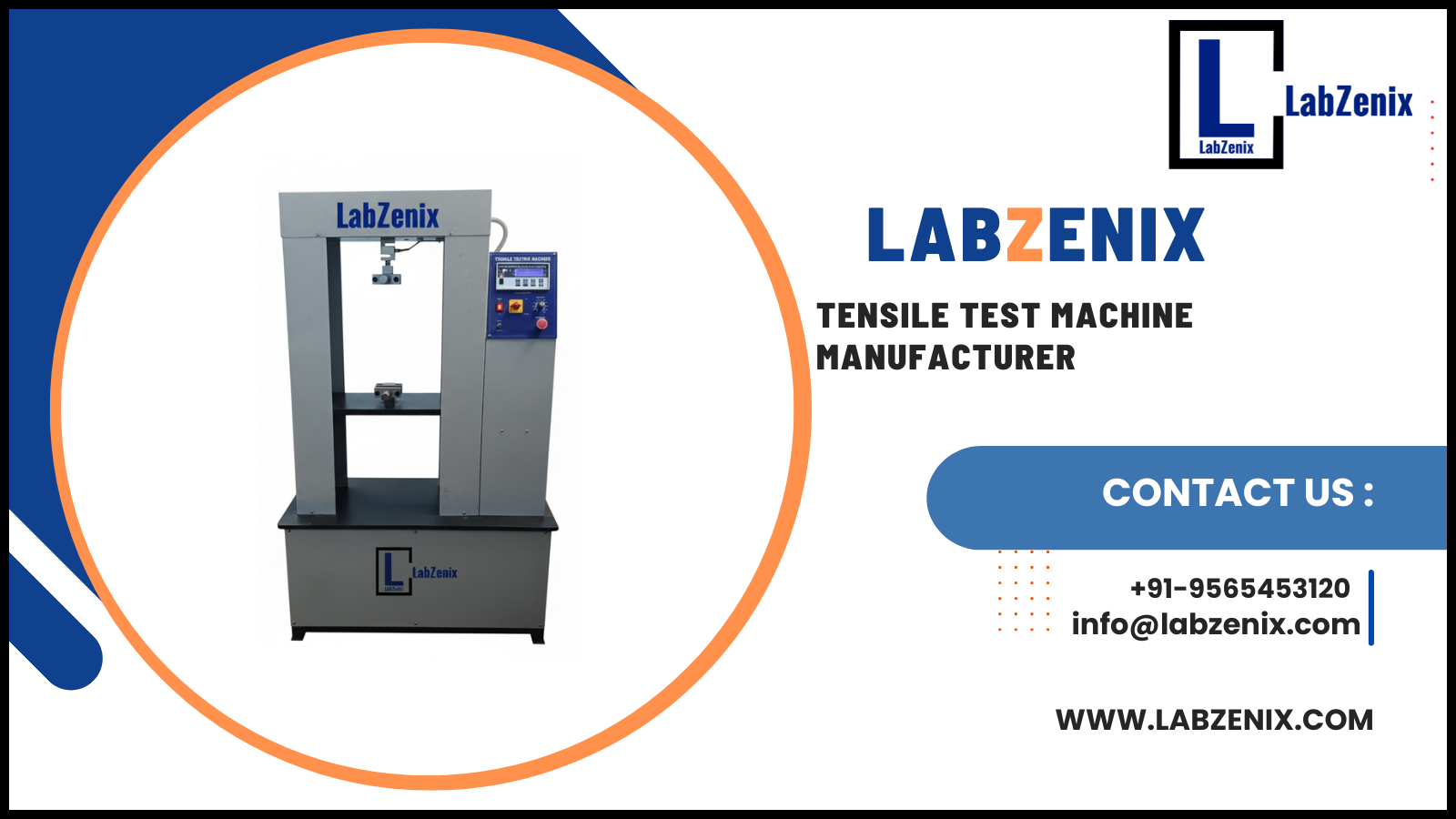
Upgrade your testing capabilities with LabZenix’s precision tensile test machine. Designed for accurate material strength analysis across metals, plastics, textiles, and composites. Our robust machines ensure reliable performance, compliance with international standards, and detailed insights into material properties. Trust LabZenix for durable equipment and expert technical support.
Description
📦 Beyond the Box: How a Tensile Test Machine Guarantees Your Packaging’s Strength & Survival 🏋️♀️
In the high-stakes world of packaging and corrugated boxes, failure is not an option. A damaged product during transit doesn’t just mean a replacement cost; it means a damaged reputation. Customers remember the unboxing experience, and if it arrives crushed, torn, or compromised, their trust in your brand takes a direct hit. So, how do you move beyond guesswork and truly know that your packaging can withstand the rigors of the supply chain? The answer lies in a fundamental piece of quality control equipment: the tensile test machine.
For companies like LabZenix, dedicated to empowering industries with precise testing solutions, the tensile test machine is the unsung hero of the packaging world. It’s the definitive tool that translates material properties into actionable data, ensuring every box, every tape, and every liner board performs its duty flawlessly.
What Exactly is a Tensile Test Machine? Let’s Break It Down 🤔
At its core, a tensile test machine—also known as a universal testing machine (UTM)—is a device designed to measure the mechanical properties of a material. It does this by applying a controlled, gradually increasing tensile (pulling) force to a specially prepared sample until it fractures.
Imagine you’re holding a strip of packaging tape between both hands and slowly pulling it apart. You’re essentially performing a rudimentary tensile test. You feel the resistance, you see it stretch, and you note the point at which it snaps. A tensile test machine automates this process with scientific precision, eliminating human error and providing accurate, repeatable data.
The key outputs from a tensile test machine are:
Tensile Strength: The maximum stress the material can withstand while being stretched before it breaks. For a corrugated box, this relates to how much force the fluting medium can handle before the structure fails.
Elongation at Break: How much the material can stretch as a percentage of its original length before fracture. This is crucial for materials like plastic films and tapes that need to be flexible.
Modulus of Elasticity (Young’s Modulus): A measure of the material’s stiffness. It tells you how much it will deform under a given load, which is vital for predicting how a box will stack in a warehouse.
Why is a Tensile Tester a Non-Negotiable in the Corrugated & Packaging Industry? 📊
The entire value proposition of a corrugated box lies in its engineered strength. It’s a masterpiece of paper physics, where the fluted medium sandwiched between liners creates a structure that is incredibly strong for its weight. A tensile tester is used to validate the components that make this possible.
1. Quality Control of Raw Materials:
Before a single box is manufactured, the paper and fluting medium must be tested. A tensile test machine assesses the tensile strength of paper and board. This ensures that the raw materials entering your production line meet the specified strength grades (like Mullen Burst or Edge Crush Test correlates), preventing costly production of weak boxes from the start.
2. Evaluating Tapes and Adhesives:
The integrity of a sealed box hinges on its tape or adhesive. A tensile test machine can precisely measure the tensile strength of packaging tapes. It determines the force required to peel the tape from a surface (peel adhesion) or the force needed to pull a strip of tape apart (breaking strength). This ensures your boxes stay sealed during rough handling and sudden drops.
3. Predicting Real-World Performance:
The data from a tensile strength test doesn’t just live in a lab report. It directly correlates to real-world scenarios:
Stacking Strength: Boxes in a warehouse must support immense weight. The tensile strength of the vertical liners directly influences a box’s top-to-bottom compression strength.
Handling Stress: When a box is lifted by its handles or dragged, tensile forces are at play. Testing the material ensures it won’t tear easily.
Durability during Transit: The constant vibrations, shocks, and pulls during shipping subject boxes to various stresses. A material with good tensile strength and elongation will absorb this energy without failing.
Key Components of a Tensile Test Machine for Your Lab 🛠️
Understanding the anatomy of a tensile test machine helps in selecting the right one for your packaging lab.
Load Frame: The robust physical structure that provides the stability to apply the force.
Load Cell: The heart of the machine, this sensor measures the force being applied with high accuracy.
Grips and Fixtures: These are the specialized clamps that hold the test sample. For packaging, you might use pneumatic grips for paper, or specific fixtures for tape and plastics.
Actuator: The mechanism (often a ball screw driven by a servo motor) that moves the crosshead up or down to apply the load.
Software: The brain of the operation. Modern software, like that offered with LabZenix systems, controls the test, collects data in real-time, and generates comprehensive, easy-to-understand reports and stress-strain curves.
Conducting a Tensile Test on Packaging Materials: A Simplified Workflow 🔬
Sample Preparation: A standardized “dog-bone” or rectangular strip of the material (e.g., a strip of liner board or a length of tape) is precisely cut.
Mounting: The sample is carefully mounted in the grips of the tensile test machine, ensuring it is straight and secure to avoid premature breaking at the jaws.
Parameter Setting: The operator sets the test parameters in the software—such as the speed of pulling (crosshead speed) and the test standard to follow (e.g., ASTM D828 for paper).
Initiation: The test begins. The machine’s crosshead moves, applying a steady tensile force. The software records the force and the elongation simultaneously.
Analysis: Once the sample breaks, the test stops. The software instantly calculates all key properties—tensile strength, elongation, modulus—and presents a detailed graph and report.
Conclusion: Invest in Certainty with a Tensile Test Machine ✅
In an industry where margins are thin and customer expectations are high, leaving packaging strength to chance is a risky business. Integrating a reliable tensile test machine from a trusted partner like LabZenix into your quality assurance protocol is an investment in product safety, brand integrity, and customer satisfaction. It transforms subjective assumptions into objective, data-driven confidence, ensuring that the boxes you ship are built to survive the journey and impress upon arrival.
Don’t just pack your products; pack them with proven strength. 🚚💪
FAQ: Tensile Test Machine for Packaging & Corrugated Boxes ❓
Q1: What is the main difference between a Tensile Test and an Edge Crush Test (ECT)?
A: While both are crucial, they measure different things. A tensile test machine measures the material’s resistance to pulling forces. The Edge Crush Test (ECT) is a specific compression test that measures a corrugated board’s ability to resist crushing on its edge, which directly relates to box stacking strength. They are complementary tests that together provide a full picture of box performance.
Q2: Can one tensile test machine handle all our different packaging materials?
A: Absolutely! A universal testing machine is designed for versatility. By simply changing the grips and fixtures, the same tensile test machine can test paper, corrugated board, packaging tapes, plastic films, and even the strength of seals and adhesives. This makes it a highly cost-effective central tool for your quality lab.
Q3: How often should we calibrate our tensile test machine to ensure accuracy?
A: For maintaining the highest level of accuracy and compliance with international standards, it is generally recommended to calibrate your tensile test machine annually. However, the frequency can also depend on usage volume, the critical nature of your tests, and specific regulatory requirements. LabZenix can provide guidance and support for calibration schedules.
Q4: Is the software difficult to learn for our quality control technicians?
A: Modern tensile test machine software is designed with user-friendliness in mind. Look for providers, like LabZenix, who offer intuitive software with pre-configured test methods for packaging materials, one-click operation, and easy-to-generate reports. Minimal training is usually required to get your team up and running.
Q5: What sample size is required for a tensile strength test?
A: The sample size is typically standardized. For paper and board, a common sample is a 15mm or 1-inch wide strip of a specific length. For tapes, a specific length and width are used as per standards like ASTM D3759. The specific requirements will depend on the test standard you are following, which the tensile test machine software can help you manage.
Contact – LabZenix

Call Us
+91 9565453120
Call Sales
+91 9354572961

info@labzenix.com

Address
LabZenix Industries Pvt. Ltd. 3D/98 New Industrial Town Faridabad , Haryana - 121001