
Tensile Test Equipment – LabZenix
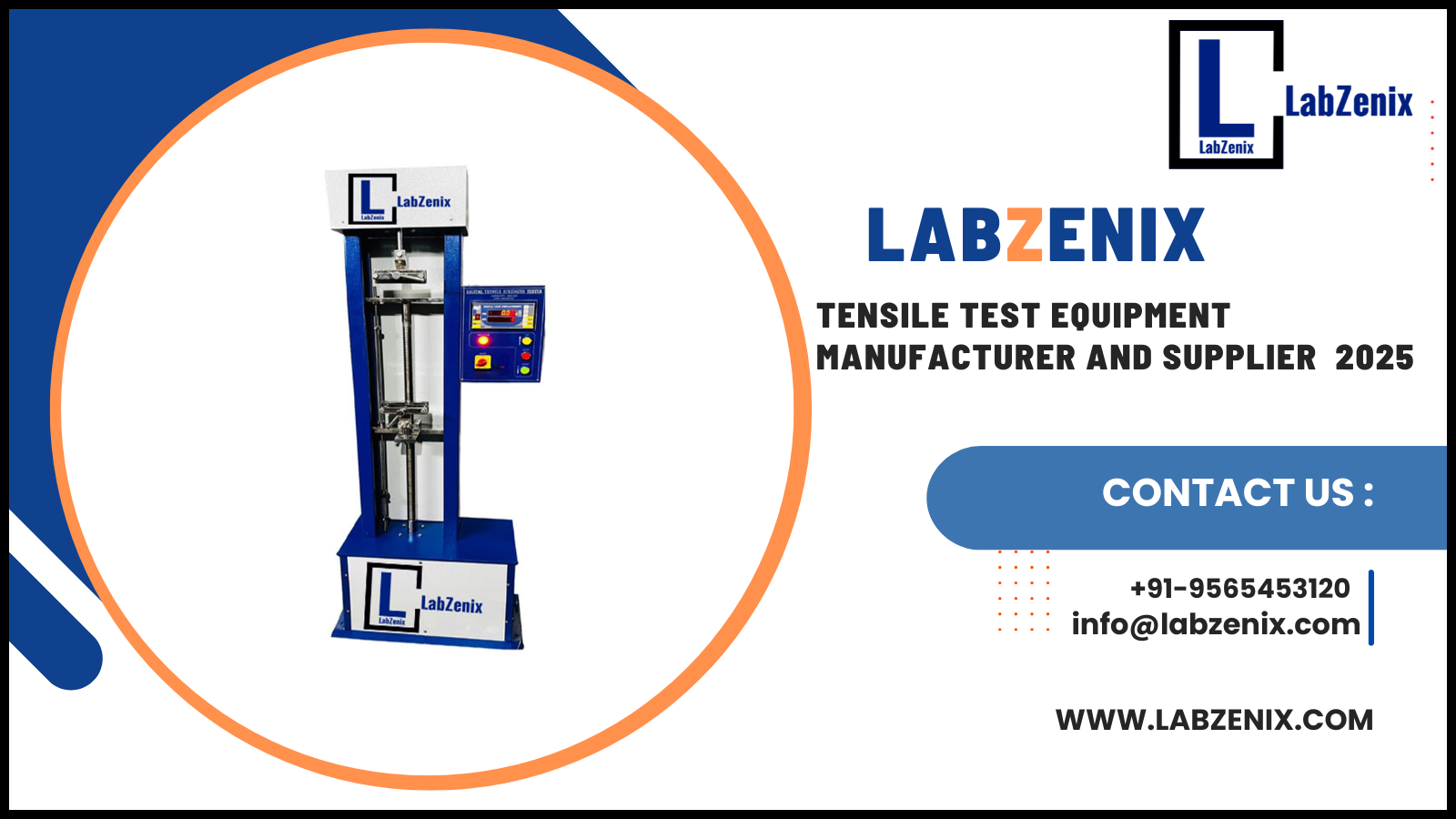
Upgrade your lab with LabZenix precision tensile test equipment. Our machines deliver accurate strength analysis for metals, polymers, textiles & composites. Ensure quality control with reliable, compliant testing solutions and expert technical support for your material testing needs.
Description
🛡️ Beyond the Box: How Tensile Test Equipment Guarantees Packaging Integrity
In the fast-paced world of logistics and e-commerce, a corrugated box is so much more than just a container. It’s the first line of defense, a brand ambassador, and a promise that a product will arrive safely. A single failure—a torn handle, a split seam, a crushed corner—can lead to damaged goods, unhappy customers, and significant financial loss. So, how do packaging manufacturers ensure that their boxes can withstand the rigors of the supply chain? The answer lies in the precision and power of tensile test equipment.
At LabZenix, we understand that the science of packaging is built on a foundation of reliable data. Tensile test equipment, often referred to as a universal testing machine (UTM), is the unsung hero in quality control labs, providing the critical insights needed to engineer packaging that doesn’t just survive but thrives.
📜 What is a Tensile Test and Why is it Non-Negotiable for Boxes?
At its core, a tensile test is a destructive physical test where a sample material is pulled apart under a controlled, gradually increasing force until it breaks. The sophisticated tensile test equipment measures the material’s reaction to this stress, generating a stress-strain curve that tells a complete story of its mechanical properties.
For the packaging and corrugated industry, this isn’t just about abstract science; it’s about predicting real-world performance. When you subject the components of your packaging—like linerboard, corrugating medium, tape, and even the glued seams—to this analysis, you unlock the secrets to:
Durability: Will the box hold up when stacked on a pallet?
Handle Integrity: Will the die-cut handles on a retail box tear during carrying?
Bursting Strength: What is the internal pressure the box material can resist?
Overall Reliability: How will the packaging perform under tension, compression, and shock during transit?
🔬 The Core Components: How Tensile Test Equipment Works Its Magic
A standard tensile test machine is a symphony of precision engineering. Key components include:
Load Frame: The robust structure that provides the stability needed for the test.
Load Cell: The heart of the operation, this sensor measures the force applied to the specimen with extreme accuracy.
Grips and Fixtures: These are the specialized clamps that hold the test sample. For packaging materials, this includes grips for paper strips, film samples, and even fixtures for testing the ply adhesion of corrugated board.
Actuator: The mechanism (often a motor-driven screw) that moves the crosshead up or down to apply the load.
Extensometer: This device is clamped onto the sample to precisely measure its elongation, providing accurate strain data.
Software: The brain of the operation. Modern software not only controls the tensile test apparatus but also collects, analyzes, and reports the data, making it easy to interpret and act upon.
📦 Key Applications of Tensile Test Equipment in the Corrugated Industry
The versatility of tensile test equipment makes it indispensable for multiple quality checks throughout the packaging manufacturing process.
1. Paper and Board Testing: The Foundation of Strength
The fluted medium and linerboards are the building blocks of corrugated cardboard. Tensile test machines are used to determine:
Tensile Strength: The maximum tension a paper strip can withstand before breaking. This directly influences the box’s resistance to being pulled apart.
Elongation at Break: How much the paper can stretch before failure, indicating its flexibility and toughness.
Tensile Energy Absorption (TEA): A critical measure of how much energy the material can absorb before rupturing, which is a key indicator of performance under impact.
2. Tape and Adhesive Bond Testing
The seals on a box are only as strong as the tape or adhesive that holds them. Tensile test equipment can perform peel tests and lap shear tests to measure:
Adhesive Bond Strength: How firmly the tape sticks to the corrugated surface.
Tensile Strength of Tape: The force required to break the tape itself.
This ensures that your boxes stay sealed from the warehouse to the customer’s doorstep.
3. Corrugated Board Ply Adhesion
A box fails if its layers separate. A materials testing machine with a specific compression fixture can measure the ply adhesion strength—the force required to delaminate the fluted medium from the linerboards. This is crucial for maintaining structural integrity under humid conditions or constant vibration during shipping.
4. Testing Finished Box Components
Beyond raw materials, the finished product can be evaluated. For instance, the tensile strength of a die-cut handle can be tested to ensure it won’t tear when a customer lifts a heavy product.
💡 LabZenix’s Guide: Choosing the Right Tensile Test Equipment
Investing in the right tensile test apparatus is critical. Here are key factors to consider:
Capacity: Determine the maximum force you need to measure. For most packaging materials, a machine with a capacity of 1 kN to 10 kN is typically sufficient.
Versatility and Fixtures: Ensure the machine can accommodate the various grips and fixtures you need for different tests (paper, tape, adhesion).
Software Capabilities: User-friendly, compliant software (meeting ASTM, ISO, TAPPI standards) is essential for generating reliable and auditable reports.
Accuracy and Calibration: Look for equipment with high-accuracy load cells and a clear path to regular calibration to maintain data integrity.
Ease of Use: In a busy lab, technicians of all skill levels should be able to operate the tensile test machine efficiently.
🚀 The Future is Strong: Embracing Data-Driven Packaging
In an era of sustainability and efficiency, guesswork is no longer acceptable. By integrating robust tensile test equipment into your quality control process, you move from reactive problem-solving to proactive performance engineering. You can optimize material usage, reduce waste, and create lighter yet stronger packaging—all while building an unshakeable reputation for reliability.
At LabZenix, we provide the materials testing machines and expertise that empower packaging innovators to push the boundaries of what’s possible. Because every box that arrives safely is a testament to the science that went into making it.
❓ Frequently Asked Questions (FAQ) About Tensile Test Equipment
Q1: What is the difference between a tensile test and a burst test?
A: While both assess strength, they simulate different types of stress. A tensile test measures resistance to a pulling or tearing force, which is crucial for handles and seams. A burst test (or Mullen test) measures resistance to puncturing or rupturing from internal pressure, simulating a box being squeezed or stacked. Both are vital, but a tensile testing machine provides a wider range of property data.
Q2: Can the same tensile test machine be used for different packaging materials?
A: Absolutely! This is a key advantage of universal testing machines. By simply changing the grips and fixtures, a single tensile test apparatus can test paper, corrugated board, plastics, tapes, and even the adhesives used in box manufacturing. This makes it a highly versatile and cost-effective investment for a quality control lab.
Q3: How often does tensile test equipment need to be calibrated?
A: For maintaining accuracy and ensuring compliance with international standards (like ISO/IEC 17025), it is generally recommended to calibrate your tensile test machine annually. However, the frequency can depend on usage volume, the criticality of your tests, and your internal quality procedures. Always refer to the manufacturer’s guidelines, like those provided by LabZenix.
Q4: What standards govern tensile testing for packaging materials?
A: Several key standards apply, including:
TAPPI T 494: Tensile properties of paper and paperboard.
ASTM D828: Tensile properties of paper and paperboard.
ASTM D638: Tensile properties of plastics (for plastic packaging components).
ISO 1924: Paper and board – Determination of tensile properties.
Your tensile test machine software should be pre-configured to run tests according to these standards.
Contact – LabZenix

Call Us
+91 9565453120
Call Sales
+91 9354572961

info@labzenix.com

Address
LabZenix Industries Pvt. Ltd. 3D/98 New Industrial Town Faridabad , Haryana - 121001