
Secure Seal Tester / LabZenix
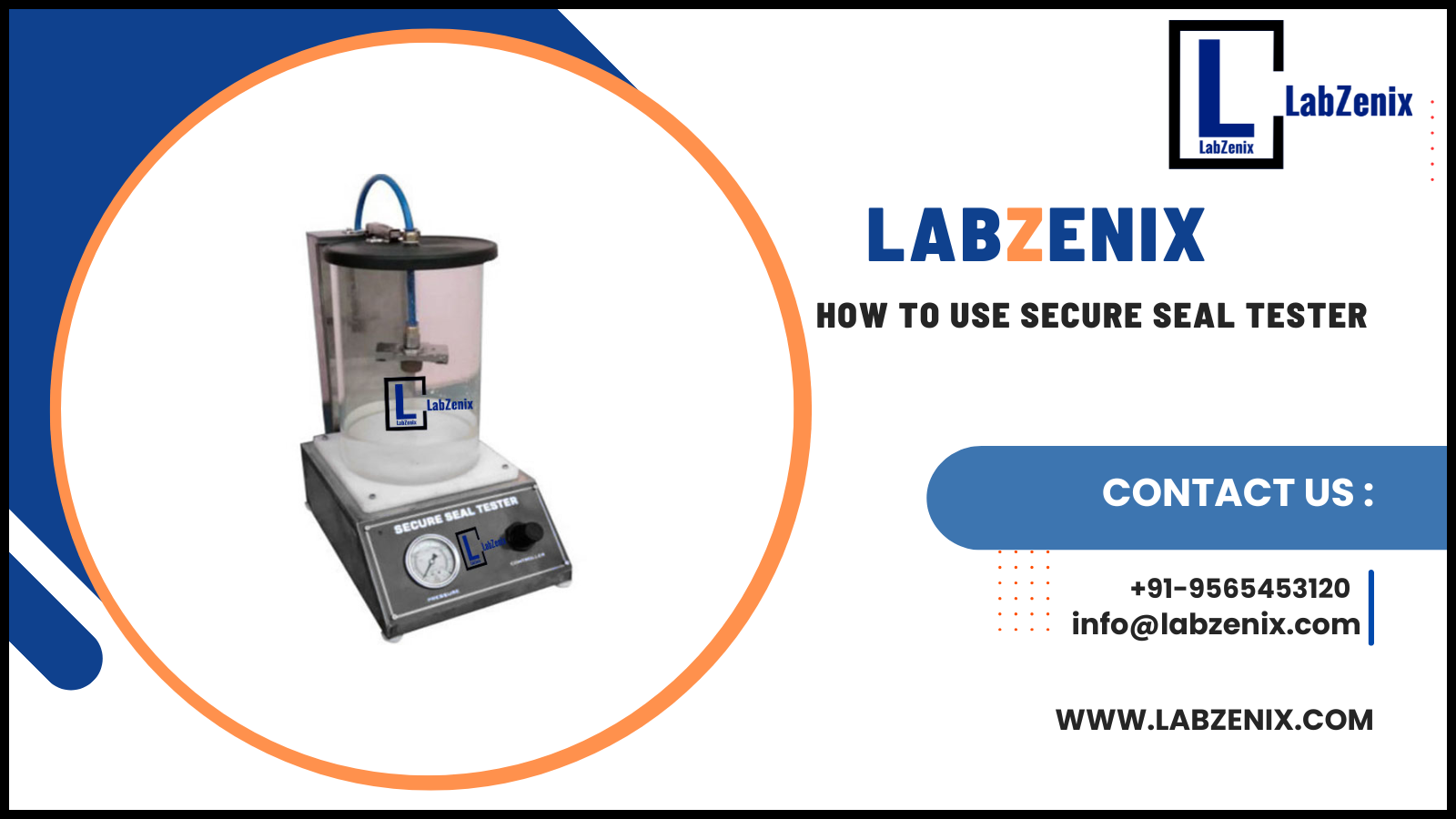
Experience precision and reliability with LabZenix secure seal tester—designed to ensure airtight packaging integrity for bottles, pouches, and containers. Achieve accurate, consistent results with advanced technology that enhances product safety, quality control, and production confidence in every test.
Description
How to Use Secure Seal Tester in the Packaging and Corrugated Box Industry 📦
In the packaging and corrugated box industry, product safety and integrity are essential for customer satisfaction and compliance with quality standards. Among the tools that ensure this integrity, the secure seal tester stands out as a vital piece of equipment. Whether you are testing beverage bottles, flexible pouches, or other sealed containers, understanding how to use secure seal tester efficiently can make a huge difference in product reliability and brand reputation.
A secure seal tester is designed to assess the sealing strength and leakage resistance of various types of packaging. In industries dealing with liquids, gases, or sensitive content, even a minor seal failure can lead to costly losses. This guide will walk you through the complete process, benefits, and common mistakes when using a secure seal tester, specifically tailored for the packaging and corrugated box industry.
Understanding the Secure Seal Tester
A secure seal tester is a specialized quality control device that applies controlled pressure to a container or packaging seal to detect weaknesses. It measures how well package seals can withstand specific pressure levels without leaking or bursting. In corrugated box packaging operations, it’s often used to assess plastic film liners, liquid-filled pouches, and containers that may be placed inside boxes.
Key purposes include:
Verifying package integrity before distribution.
Detecting leaks or seal failures early.
Ensuring compliance with packaging regulations.
Improving customer satisfaction and reducing returns.
Similar tools like the seal strength tester and methods for seal testing help maintain consistent product quality, especially when combined with leak detection in packaging procedures.
Step-by-Step: How to Use Secure Seal Tester
Step 1: Preparation
Understand your packaging type. Secure seal testing parameters will vary between rigid containers, soft pouches, and laminated films. Check your sample specifications and ensure the tester is calibrated before running tests.
Step 2: Place the Sample
Insert the packaged item into the secure seal tester chamber. For containers with caps or closures, ensure they are fastened as they would be for shipping.
Step 3: Set the Test Parameters
Input pressure levels according to your industry standards. In liquid packaging, pressures often simulate internal carbonation or vacuum conditions. In corrugated box packaging applications, internal liner seals must be tested at similar conditions to real-world stress.
Step 4: Begin the Secure Leak Testing
Activate the tester. The device will gradually increase internal pressure to identify weaknesses. During seal testing, some testers measure burst strength, while others monitor leakage over a set duration.
Step 5: Record and Interpret Results
If the packaging withstands the set pressure without visible or measurable leaks, it passes. If leakage is detected, note the failure point for corrective action.
Step 6: Make Adjustments
Data from Leak seal testing can guide changes in sealing temperature, pressure, adhesive properties, or sealing machine calibration to improve seal quality.
Best Practices for Accurate Secure Seal Testing
Calibrate regularly: An uncalibrated tester can give false pass or fail results.
Test under production conditions: Try to replicate actual packaging line parameters for realistic outcomes.
Use correct test fluids: Some tests require water immersion, while others use dry pressure.
Test multiple samples: This ensures statistical reliability in the results.
Combine with other quality checks: Use alongside a seal strength tester for complete evaluation.
Why Secure Seal Testing is Critical in the Corrugated Box Industry
Though corrugated boxes themselves are not sealed by air or pressure, they often contain sealed inner packing—liquid bottles, sachets, or pouches. A leaking inner package can damage the outer corrugated structure, weaken stacking strength, and cause product loss. Therefore, leak detection in packaging is essential not just for product preservation but also for logistical efficiency.
Key benefits include:
Prevention of transit damage: Stops leakage before it can affect cartons during shipping.
Enhanced brand trust: Customers associate strong seals with reliability and quality.
Reduced waste: Minimize discarded products from packaging failure.
Regulatory compliance: Certain exports require documented secure seal testing.
Common Mistakes to Avoid When Using a Secure Seal Tester
Skipping preliminary inspection: Always check physical seal appearance before testing.
Applying incorrect pressure: Too high may damage viable seals; too low may fail to detect micro-leaks.
Neglecting temperature impact: Seal integrity can change at different storage temperatures.
Not recording data: Documenting results supports process improvement.
Maintenance Tips for Your Secure Seal Tester
Clean the test chamber after every use to avoid contamination.
Inspect seals, hoses, and fittings for wear.
Recalibrate according to the manufacturer’s recommendations.
Train operators thoroughly to ensure consistent usage.
Advanced Applications in Packaging QA
Modern secure seal testers are now integrated with digital data logging and automated leak detection. This is especially valuable in high-volume beverage bottling, pharmaceutical packaging, and food industries where precision is non-negotiable.
In the corrugated box sector, some manufacturers combine Digital secure seal machine with drop tests and edge crush tests for a complete quality assessment.
FAQs on How to Use Secure Seal Tester
Q1: What is the main purpose of a secure seal tester?
A secure seal tester evaluates whether a packaging seal can withstand specific pressure without leaking or bursting.
Q2: Can a secure seal tester be used for corrugated boxes directly?
Not directly, but it evaluates sealed inner packaging that will be placed inside the corrugated box.
Q3: How often should secure seal testing be done in production?
Ideally, perform tests on every batch or production shift to ensure seal integrity.
Q4: What’s the difference between a seal strength tester and a secure seal tester?
A seal strength tester pulls apart sealed materials to assess tensile strength, while a secure seal tester measures resistance to internal pressure and leakage.
Q5: Can it detect micro-leaks invisible to the eye?
Yes, many modern testers can identify very small leaks that visual inspection cannot.
Q6: How does secure seal testing improve sustainability?
It prevents product loss, reduces waste, and ensures that only durable, safe packaging enters the supply chain.
Q7: What industries benefit the most?
Beverage, food, pharmaceutical, cosmetics, and any sector using sealed liquid or air-filled packaging.
Contact – LabZenix

Call Us
+91 9565453120
Call Sales
+91 9354572961

info@labzenix.com

Address
LabZenix Industries Pvt. Ltd. 3D/98 New Industrial Town Faridabad , Haryana - 121001